
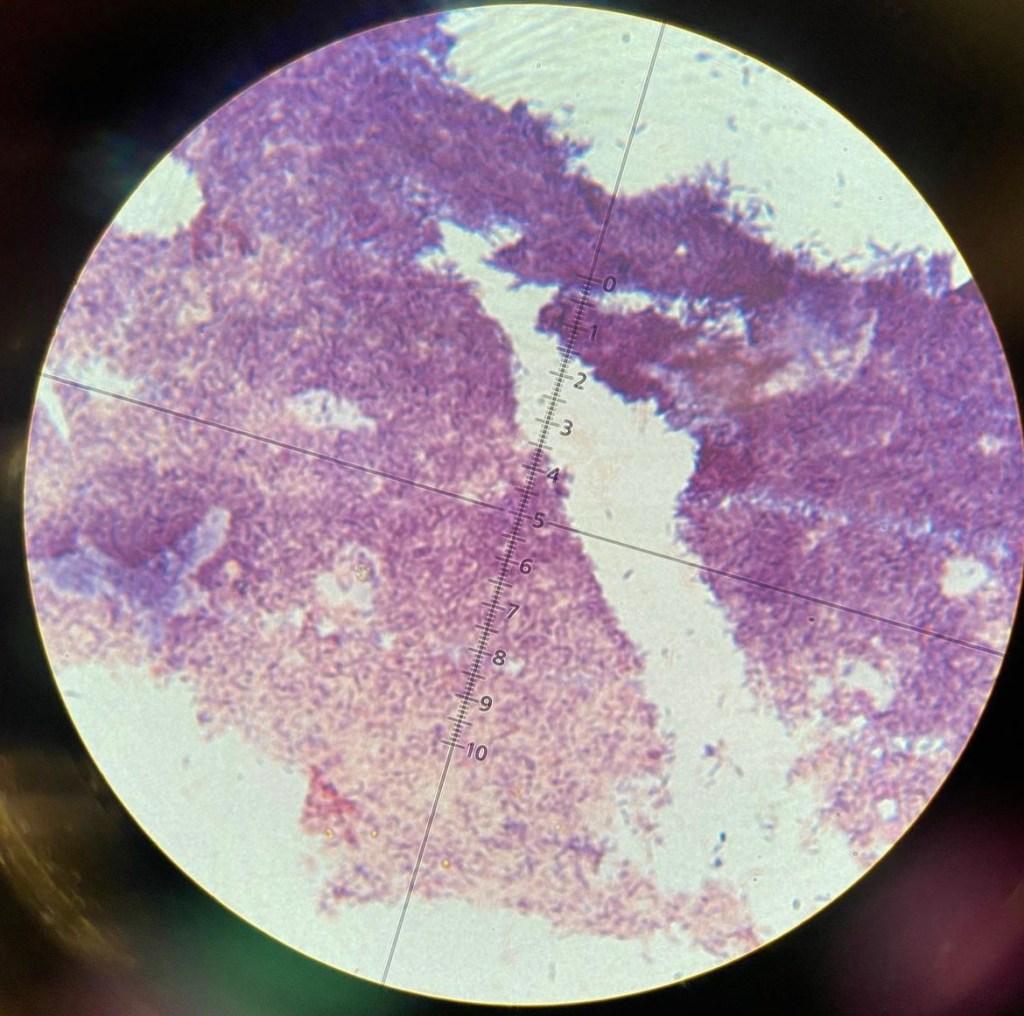
We’ve all heard of antibiotic resistance, no matter how in the loop of medical sciences we are. Whether it be from our doctor explaining why they can’t give us antibiotics for a simple infection or learning about bacteria and antibiotics in school. What matters is that antibiotic resistance is rising and this is one of the greatest medical and social challenges we will face in the coming future. But what exactly is antibiotic resistance?
Antibiotic resistance occurs when bacteria develop resistance to antibiotics and, subsequently, the bacteria no longer responds to an antibiotic that previously killed it. A current example of a bacteria strain which has become antibiotic resistant is Staphylococcus aureus, a common bacteria responsible for many soft tissue infections (EFSA. N/A). This is significant as 20-30% of people host the bacteria on their skin, so it can present serious chronic infection, particularly amongst vulnerable patients in hospitals (EFSA. N/A).
Factors that have led to antibiotic resistance mostly reside in the industrial use of antibiotics, such as the addition of antibiotics to animal feed in mass farming (Turner, P. 2022) with the goal of increased yield and profit. This has resulted in the development of bacteria that are not responsive to antibiotics, increasing the mortality of antibiotic resistant infections and even elevating them to what is likely to become a leading cause of death among human populations, even greater than cancer deaths (Turner, P. 2022). To many, this may appear as a sort of dystopian future that is unlikely to affect us, but this is untrue. Though most people who currently suffer from antibiotic resistant bacterial infections are immunocompromised if the current way of using antibiotics continues and the proportion of antibiotic resistant bacteria increases, the effectiveness of antibiotics will rapidly decrease in the coming years.
However, there is light to the matter. This can be shown when looking into the case of 16 year old Isabelle Carnell-Holdaway (Gallagher J. 2019) who contracted a disseminated Mycobacterium abscess infection (a common antibiotic resistant bacteria that does not usually cause sickness in immunocompetent people) after undergoing a lung transplant and being placed on immunosuppressants (Gallagher, J. 2019) in treatment for cystic fibrosis. (Avramova, N, etal. 2019). When undergoing rounds of intravenous antibiotics, Isabelle’s mortality was predicted to be less than 1% (Avramova, N, etal. 2019). However, when practitioners attempted a new way of treating Isabelle’s infection, she began to show ‘objective clinical improvement’ (Mayor, S. 2019) and began her journey to a full recovery.
But what was this new treatment?
The treatment used on Isabelle was called ‘Phage therapy’, one of the most successful alternative treatments for antibiotic resistant infections (Kakasis A, Paints. G. 2019). Already having been used outside of the Western world since the 20th century (Almeida G, et al. 2020) it involves the use of phages, natural viral predators of bacteria, to treat infections. Upon the phage’s entry into the cell they bind to the bacteria and are absorbed into the cell. In a similar way a virus such as Covid-19 may replicate within a human cell, the phage then expresses its own proteins using the bacterial replication methods and then assembles itself within the cell. Once completed, the phage is released from the bacterial cell and causes it to burst, killing it (Lodish, H. 2013). The phage particles then travel to other parts of the body, killing any further bacteria causing infection (Abedon, S,T. 2011).
Are there limitations?
Though this seemingly sounds fantastic, as though antibiotic resistance shall now be resolved, there are limitations. The same treatment used on Isabelle was also used on an 81 year old immunocompetent patient with bronchiectasis and refractory abscessus lung disease infected with bacteria closely related to Isabelle. Though this patient initially showed improvement, after six months the abscess count was higher than before treatment (Dedrick, R.M. Et al. 2021) showing phage therapy failing to decrease bacterial count. This poses questions as to why two seemingly similar cases responded so differently to phage therapy. The key difference, however, may be the fact that Isabelle was on immunosuppressants due to her recent lung transplant whilst the 81 year old patient had a fully functioning immune system. This is significant as since phages are viral, they can trigger an immune response, while Isabelle would have had limited to no immune response to the phages, the 81 year old patient would have, potentially resulting in their alternative outcomes to treatment.
The immune response experienced in the 81 year old patient would have resulted in phage neutralising activity due to phage specific humoral response (Krut. O, et al. 2018) which was determined as the reason for treatment failure (Dedrick, R.M. Et al. 2021). Phage specific humoural response refers to the production of anti-phage antibodies, resulting in phage inactivation by binding to bacteriophages, preventing them from binding to the bacterial surface and entering the cell and subsequently preventing treatment success. So in the future perhaps a combination of immunosuppressants and a specific phage ‘cocktail’ is the answer to treating antibiotic resistant bacterial infections.
Subsequently, though the introduction to this blog started with an image of a dystopian future, where antibiotic resistant bacteria dominate all, I will conclude by highlighting the significance of acknowledging alternative treatments such as phage therapy, showing how innovative thinking and new medical practices will enable humanity to overcome some of the greatest challenges we face in the future. Perhaps all is not lost to bacterial evolution and for once a virus may actually save us.
Written by Francesca Giannachi-Kaye
Biological Sciences graduate from the University of Exeter
Bibliography:
- Better Health. (N/A). Antibiotic Resistant Bacteria. Available at: https://www.betterhealth.vic.gov.au/health/conditionsandtreatments/antibiotic-resistant-bacteria#bacteria-resistant-to-antibiotics (Accessed: 04/08/2022)
- EFSA. (N/A). Meticillin- resistant Staphylococcus aureus (MRSA). Available at: https://www.efsa.europa.eu/en/topics/topic/meticillin-resistant-staphylococcus-aureus-mrsa (Accessed 04/08/2022)
- Avramova, N. Scutti, S. (2019). Genetically modified virus saves teen’s life, offers hope in fight against antibiotic resistance. Available at: https://edition.cnn.com/2019/05/09/health/cystic-fibrosis-teen-engineered-bacteriophage-study/index.html (Accessed: 04/08/2022)
- Gallagher, J. (2019) ‘Phage therapy: ‘Viral cocktail saved my daughter’s life’, BBC news, 8th May. Available at: https://www.bbc.co.uk/news/health-48199915 (Accessed: 9/12/21)
- Mayor, S. (2019) ‘Sixty seconds on… bacteriophages’, BMJ: British Medical Journal, 365, (10). doi: 10.1136/bmj.I2183
- Kakasis, A. Paints a, G. (2019) ‘Bacteriophage therapy as an alternative treatment for human infections. A comprehensive review’. International Journal of Antimicrobial Agents, 53, pp16-21. Available at: https://www.sciencedirect.com/science/article/pii/S0924857918302632 (Accessed: 7/12/21)
- Almeida, G. Sundberg, L. (2020) ‘the forgotten tale of Brazilian phage therapy’, the lancet infection diseases, 20, (5), pp 90-101. Available at: https://doi.org/10.1016/S1473-3099(20)30060-8 (Accessed: 20/1/22)
- Lodish. H, Kaiser. C.A, Bretscher. A, Amon. A, et al. (2013) Molecular Cell Biology. Seventh edition. New York: W.H. Freeman and Company
- Abedon, S,T. Kuhl, S,J. Kutter, E,M. (2011). Phage treatment of human infections. Available at: https://www.ncbi.nlm.nih.gov/pmc/articles/PMC3278644/#:~:text=Phages%20as%20bactericidal%20agents%20have,phages%20to%20treat%20human%20infections. (Accessed: 04/08/2022)
- Dedrick, R.M. Et al. (2021) ‘potent antibody- mediated neutralisation limits bacteriophage treatment of a pulmonary Mycobacterium abscesses infection’, nature medicine, 27, pp1357-1361. Doi: 10.1038/s41591-021-01403-9
- Turner, P. (2022). Phage therapy targeting antibiotic- resistant bacteria. Available at: https://youtu.be/kPqbcvCTE80 (Accessed: 05/08/2022)
- Krut. O, Bekeredjian-Ding. I. (2018) ‘Contribution of the immune response to phage therapy’. J Immunol. Pp3037-3044. Doi: 10.4049/jimmunol.1701745
- Reindel. R, Fiore, C.R. (2017) ‘Phage therapy: considerations and challenges for development’, Clinical Infectious Diseases, 64, pp1589-1590. Available at: https://academic.oup.com/cid/article/64/11/1589/3058816 (Accessed: 20/1/22)
- Zaczek. M, et al. (2019) ‘Humoral Immune response to phage-based therapeutics’, Phage Therapy: A practical approach, pp123-143. Available at: https://link.springer.com/chapter/10.1007/978-3-030-26736-0_5#citeas (Accessed: 9/12/21)
 All Things Biology