What is the first thought that pops into your mind when you read the word alien? Do you think about other solar systems far away, do you think closer to home with planets like mars coming into your mind? One thing you might not think about when reading the word alien is earth…
What if I were to tell you that our best bet to furthering the search for extraterrestrials was not up in the sky but right here, down on earth…
Extremophiles:
The Seeker’s video tells us about extremophiles, organisms that live in extreme conditions most terrestrial life forms would be unable to survive in (3), such as in extreme temperatures, pH, high radiation levels, without oxygen or light, etc (1). These extreme environments may come as close as you can hear on earth to the conditions found on other planets, like Mars. Extremophiles have been found in a range of extreme environments from 6.7km inside earth’s crust, to 10km deep in the ocean, to hydrothermal vents at 122 degrees Celsius and in frozen sea ice at -20 degrees Celsius (3).
Extremophiles are classified based on what conditions they grow in:
| Thermophiles/ Hyperthermophiles | Organisms grow in very low or high temperatures |
| Psychrophiles | Organisms thrive at low temperatures |
| Acidophiles | Organisms thrive in acidic pH |
| Alkaliphiles | Organisms thrive in alkaline pH |
| Halophiles | Organisms require NaCl for growth |
| Polyextremophiles | Organisms are able to live in multiple extreme conditions |
| Xerophile | An organism capable of growth at very low water activity |
| Piezophile | Organic that lives optimally at high hydrostatic pressure |
| Endolith | An organism that lives inside rocks |
| Anaerobe | An organism than grows in the absence of oxygen |
Extremophiles can be found in all of the three domains of life: bacteria, archaea and eukarya, all of which might help us in the search for extraterrestrial life but in this blog were going to take a closer look at bacteria…
A closer look into bacterial extremophiles: cyanobacteria…

An example of a bacterial extremophile species is cyanobacteria. Found usually in the form of microbial mats with other bacteria, they have been seen in extreme conditions many consider to be hostile for life (6). For example, they can be found in arctic ice, continental hot springs, hyper saline and alkaline lakes, thrive in high metal concentrations and xerophilic conditions (3).
Fun Fact: bacteria have resided on the earth for over 3.8 billion years with life being totally microbial for 3.2 billion years, evolving huge diversity (6). Cyanobacteria evolved between 2.7-2.2 billion years ago (6), were the first ever oxygenic photosynthesizer (making them responsible for the oxygenation of the earths atmosphere (6)) and are described as the source for chloroplasts in eukaryotes (5), enabling the evolution of plants (6). So in short, cyanobacteria are responsible in shaping the present biosphere!
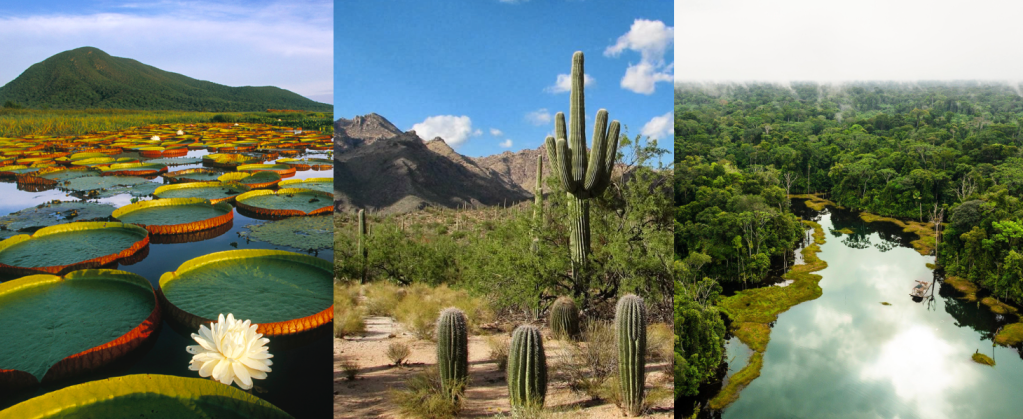
The amount of time cyanobacteria have had to evolve is one of the reasons why they occupy such extreme niches on our planet (6). An example of cyanobacteria residing in an extreme environment is in Brazil where environments such as the Pantanal wetlands, Caatinga and, of course, the Amazon rainforest pose extreme conditions for most organisms (7). Cyanobacteria from these ecosystems has been cultured and studied giving insight into the diversity an potential uses these species might pose in terms of renewable energy resources, microbiolization of degraded and unproductive soils, bioremediation (7), or even in the search for extraterrestrials.
How bacteria extremophiles could help us in the search for extraterrestrials:
Researches have grown increasingly more interested in investigating into wether species of bacteria extremophiles could survive in space- 2011 study mentioned in the video: subjecting extremophile bacteria strains to extreme gravity and found one strain survived and experienced rapid growth. means life forms could survive in space.
The development of space technology means that now astro-biologists can expose organisms to space like environments by using ESA Biopan, expose facilities and NASA nano satellites (11).
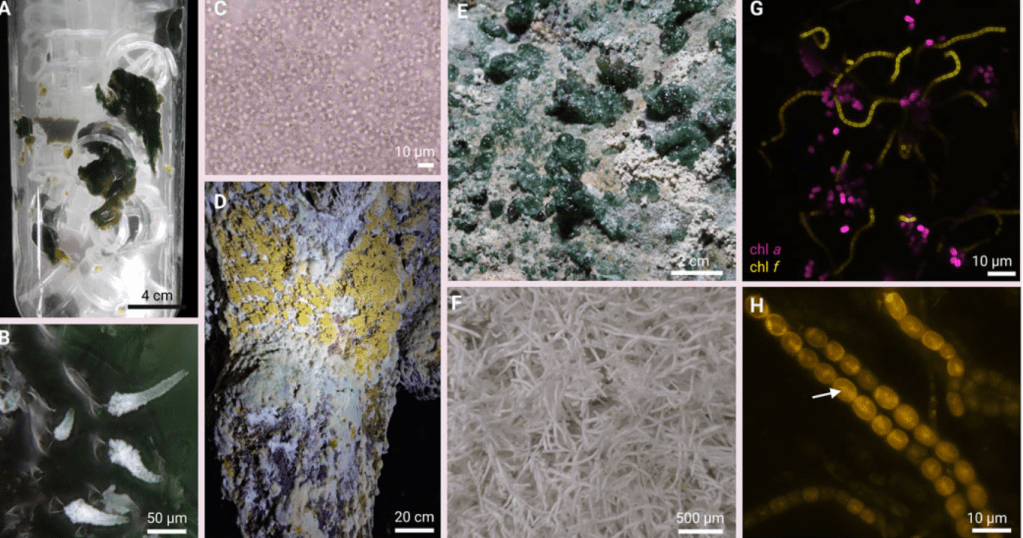
Cave inhabiting cyanobacteria act an attractive model for astrobiology (12). The above image (from source 12) shows several Cyanobacterium from cave environments with D and E showing biofilms formed in the caves. These species tolerate extreme conditions like desiccation, ionising and UV radiation (11): similar conditions that may be experienced in space. Some of these species have even been selected for future space missions, and have even been signalled out as a potential aid to support life systems when forming settlements on the moon or mars (11) as Mars contains large, interconnected cave systems and the Moon has large craters and lunar tubes (12). Though of course this needs more research into…
Could they even help us understand how life started here on earth?
The theory panspermia theory (yet to be proven) suggests life forms can transfer from one world to the next by travelling across space using comets as a vector (1). Studies into bacteria like cyanobacteria’s ability to survive in space could support panspermia theory and possible indicate that life on earth started in this way (13). Though this sounds quite unrealistic, microbes were the first organisms to appear on earth, billion of years ago, and genetic analysis has revealed they had a similar genetic code, indicating a common origin (13).
If this is true then what implications could this have for space travel, aliens or even our own progress into the terraforming of Mars or other planets in the future?
- https://youtu.be/pmy1cH7bQBw?si=wF4AbRn2aQOxk_bj
- https://www.scientificamerican.com/article/hardy-microbes-hint-at-possibilities-for-extraterrestrial-life/
- https://www.mdpi.com/2075-1729/3/3/482
- https://botweb.uwsp.edu/cyanobacteriay.htm
- https://serc.carleton.edu/microbelife/extreme/extremophiles.html
- https://link.springer.com/chapter/10.1007/978-1-4020-6112-7_36
- https://www.sciencedirect.com/science/article/abs/pii/B9780128148495000162
- https://www.jetsetter.com/magazine/things-to-know-before-you-go-to-the-amazon-rainforest/
- https://inspirationseek.com/pantanal-wetlands-brazil-the-largest-freshwater-wetland-ecosystems-in-the-world/
- https://www-geografia.blogspot.com/2013/10/caatingas.html
- https://art.torvergata.it/handle/2108/87387
- https://www.frontiersin.org/articles/10.3389/fspas.2023.1107371/full
- https://www.sciencedirect.com/science/article/abs/pii/S0168945208002422
 All Things Biology