
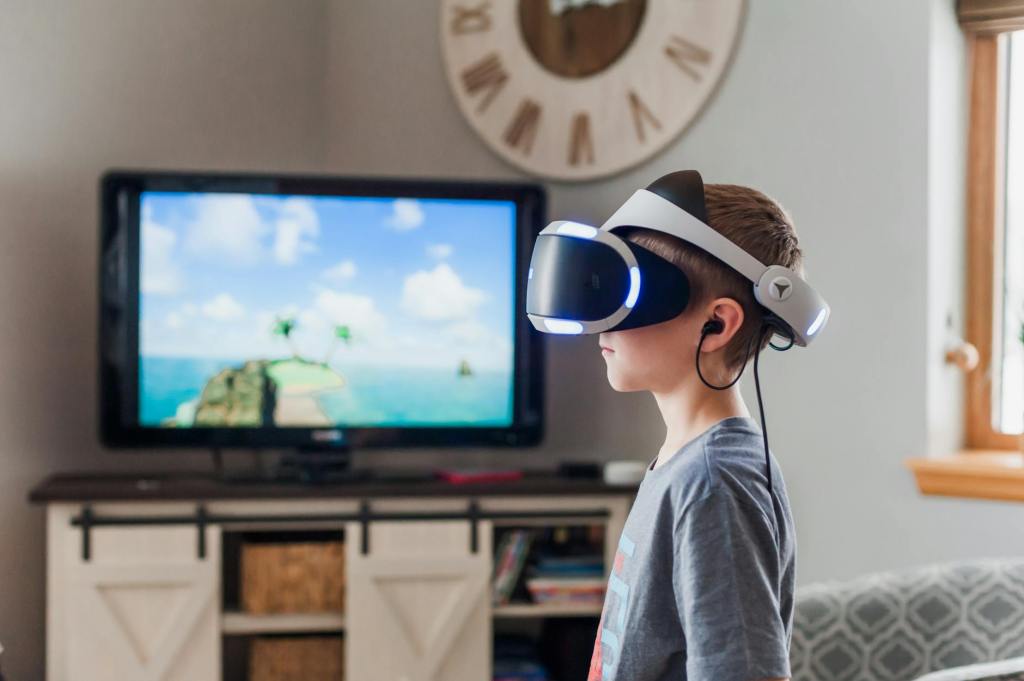
Is there a place for virtual reality in science communication? I think so, let me explain why.
Firstly, what is virtual reality? Iberdrola describes virtual reality as a ‘computer generated environment with scenes and objects that appear to be real making the user feel they are immersed in their surroundings’ (1). It’s different to augmented reality which involves adding virtual objects into the real world (1).
Virtual reality already has some applications in medicine, education, entertainment and architecture (1). For example, whilst conducting research for this blog I stumbled upon a company called SyncVR Medical which advertises virtual reality for medical care. The site pointed me to research which has shown that VR reduces pain and anxiety in children and suggests the use of VR to augment physiotherapist programs and to aid in managing acute pain in adults (2).
So how could VR or augmented reality be used to advance science communication?
Since I started studying biology at a more advanced level (degree level) it strikes me how regularly I come across people who feel intimidated or almost afraid of the sciences. A survey conducted by the department of business, energy and industrial strategy showed that in 2019 only 1/2 the population felt informed about science in the UK (4).
The Covid-19 crisis demonstrated to us all how challenging it can be for scientists to communicate basic biology to the general public. Public confidence in scientists and medics was even seen to decrease from 2021-2022 with only 29% of Americans saying they trust science specialist in 2021 (decreased from 40% in 2020) (3).
So what causes this mistrust and the general publics science information deficit?
Likely due to an inability for out education system to reach 50% (4) of the population and educate them about science. The education system facets significant challenges such as fulfilling each individual students learning style requirements (visual, auditory, kinaesthetic, read/write (6) with traditional education formats mostly aimed at read/write learning style).
In addition to this the classroom environment is not ideal for students with attention deficit/ hyperactivity disorders like ADHD.
I argue, this is where VR and augmented reality could come in to save the day.
Virtual reality and augmented reality could benefit visual, auditory and kinaesthetic learners as well as individuals with attention deficit/ hyperactivity disorders. I
This has already been shown in a study already conducted by Frolli and colleagues which showed students with ADHD showed improved performance when using VR schooling compared to traditional schooling (6).
So what about VR for science communication?
Upcoming work: Factory42 ‘the beetle story’

Let’s look at a case study: the beetle story created by Factory42 in conjunction with meta immersive learning, part of a series of immersive story experiences soon to be released onto the meta App Store by factory42.
During this experience you are shrunk down to the size of a beetle and undergo a journey through the Amazon rainforest alongside your beetle friends. Through the magic of VR you’re able to fly with beetles, pollinate a lily flower and experience a night within the lily flower. Just like the beetle Cyclocephala castanea, native to the Amazon basin.
The goal of the project is to encourage individuals to feel more empathetic towards the environment. I believe the project could inspire new environmentalists, encourage people to explore further into ecology and explore their environment around them. I even believe that placed into schools experiences like these could inspire a future generation of biologists who would have otherwise been uninterested in science.
Moving away from Favtory42’s beetle experience I believe that VR and augmented reality experiences could aid in visualising otherwise abstract ideas often challenging to understand in science. For example, as Aswin Sai Narain Seshasayee put beautifully biology consists of ‘molecular dances’ such as the reactions that occur at a cellular or genetic basis. These molecular dances may be more approachable when visualised through the use of VR. Take this further into chemistry and physics and you could make typically totally abstract concepts approachable, even to the most visual of learners.
But what are the limitations of this?
I think the main limitation to this would be financing schools to host and manage VR headsets, etc. In a climate where not every school has laptops is it realistic to think schools could afford VR headsets and charges etc needed to host such experiences. Could this in fact make the knowledge gap wider by meaning those from high social economic backgrounds have access to VR learning while those from lower social economic backgrounds don’t?
To conclude, the potential for virtual reality and augmented reality learning is huge. I believe it could help make education more accessible to people with different styles of learning as well as people with attention defects/ hyperactivity disorders. By doing this VR could inspire more people to enter into biology and the sciences.
Written by Francesca Giannachi-Kaye
References:
1. https://www.iberdrola.com/innovation/virtual-reality
2. https://www.syncvrmedical.com/?gclid=EAIaIQobChMI2dbE9ayogQMVzIhQBh0WugGUEAAYAyAAEgL6oPD_BwE
3. https://www.pewresearch.org/science/2022/02/15/americans-trust-in-scientists-other-groups-declines/




 All Things Biology
Leave a comment