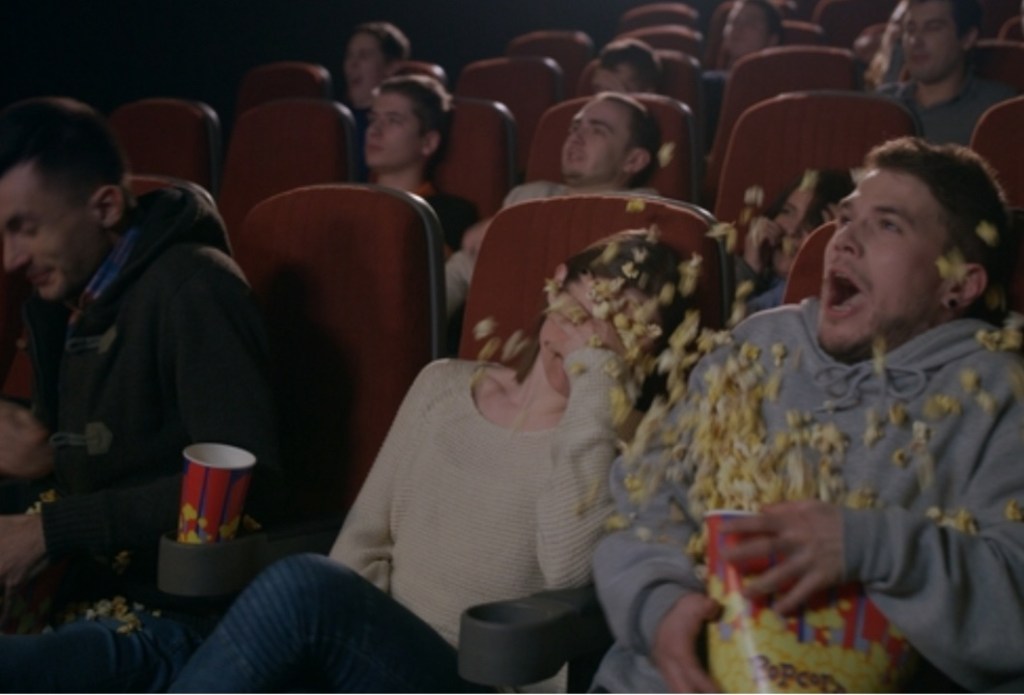
Within milliseconds, your sympathetic nervous system is activated. This releases stress hormones such as adrenaline and cortisol into the bloodstream. Adrenaline rapidly increases heart rate and blood pressure, ensuring that oxygen and nutrients are delivered quickly to vital organs and muscles (1). This heightened cardiovascular response enhances blood flow to your skeletal muscles, increasing their strength and agility for action. Meanwhile, cortisol mobilises glucose stores in your liver and muscles, providing a readily available source of energy for the body’s increased metabolic demands (2). Your respiratory rate also increases, allowing for faster gas exchange and oxygen delivery to tissues. Additionally, the pupils dilate to improve visual acuity, while non-essential bodily functions, such as digestion and immune response, are temporarily suppressed to divert resources towards immediate survival need (3). These physiological changes enable you to react swiftly and effectively to perceived threats, whether by confronting the danger directly or fleeing from it. This has been popularly dubbed the ‘fight or flight’ response. The perceived danger? You’re watching the new Scream film at your local Vue.
Why We Still React to Fictional Threats
Our bodies have evolved over millions of years to survive in a world teeming with real dangers – predators, rival tribes, and environmental hazards. The same physiological responses that once helped our ancestors escape from sabre-toothed tigers or fend off rival clans are still hardwired into our DNA. When we watch a horror film, our brain doesn’t distinguish between the fictional threat on the screen and a genuine life-or-death situation. It triggers the same cascade of stress hormones,preparing us for action (4). Adrenaline, the forefront of this biological process, surges through our veins. Our heart races, our palms sweat, and our muscles tense. It’s as if our body believes we’re being chased by a hungry predator. Meanwhile, cortisol mobilises energy reserves, ensuring we have the fuel to fight or flee. These Darwinian adaptations persist because they’ve been remarkably effective at keeping our ancestors alive (5). So, when Leatherface pops up with his chainsaw to attack Sally in The Texas Chainsaw Massacre, our nervous system responds as though we too are about to be reduced to a bloody pulp.
Suspense, Surprise, Survival
A good horror film manipulates our brain’s reward centres (6). The anticipation of fear – the eerie silence before the jump scare, the shadowy figure lurking in the background – activates the amygdala, our brain’s emotional alarm system. It’s the same region that lights up when we encounter real threats. As the tension builds, our brain releases dopamine, creating a mix of fear and pleasure (7). We’re hooked, unable to look away, even though we know what we see is not real.
But why do we willingly subject ourselves to terror? Perhaps it’s because our brains crave novelty and unpredictability. In our safe, sanitised lives, horror films provide a controlled environment to experience intense emotions. They allow us to explore the boundaries of fear without risking our actual survival – of course, the only real danger you’ll encounter inthe cinema is to your wallet after you shell out seven quid for a bag of popcorn (8).
To summarise, horror films tap into our primal fears, activating the same fight-or-flight response that once saved our ancestors from peril. As we sit in the darkened theatre, our bodies react as if we’re in the wild, surrounded by unseen dangers. So, the next time you jump at a creaking floorboard or think you see something out of the corner of your eye, you can thank evolution – it’s the reason you’re still here to enjoy the horror genre today.
Written by George Bonner
References:
1. Chang YT, Huang WC, Cheng CC, Ke MW, Tsai JS, Hung YM, et al. (February 2020). “Effects of epinephrine on heart rate variability and cytokines in a rat sepsis model”. Bosnian Journal of Basic Medical Sciences. 20 (1): 88–98.
2. Padgett, David; Glaser, R. (August 2003). “How stress influences the immune response”. Trends in Immunology, 24(8), 444–448.
3. Schmidt, A.; Thews, G. (1989). “Autonomic Nervous System”. In Janig, W. (Ed.), Human Physiology, (2nd ed., pp. 333–370). New York, NY: Springer-Verlag.
4. Kozlowska, Kasia; Walker, Peter; McLean, Loyola; Carrive, Pascal (2015). “Fear and the Defense Cascade: Clinical Implications and Management”. Harvard Review of Psychiatry, 23(4), 263–287.
5. Jansen, A.; Nguyen, X.; Karpitsky, V.; Mettenleiter, M. (27 October 1995). “Central Command Neurons of the Sympathetic Nervous System: Basis of the Fight-or-Flight Response”. Science Magazine, 5236(270), 644–646.
6. Kuhn, Annette; Westwell, Guy (20 December 2012), “horror film”, A Dictionary of Film Studies, Oxford University Press
7. Feinstein, J. S., Adolphs, R., Damasio, A., Tranel, D. (January 2011). “The human amygdala and the induction and experience of fear”. Current Biology, 21(1), 34–38.
8. Vue food prices, retrieved from: https://www.moviefoodprices.com/vue-food-prices/. (£9.59 for a regular popcorn and drink? Spooky.)
 All Things Biology