Everyone has been talking about the impact microplastic has on marine ecosystems, but an exclusive interview with Professor Ceri Lewis, a researcher at the University of Exeter, suggests microfibres are an overlooked evil.

“Fashion is the second most polluting industry in the world”
United Nations Conference on Trade and Development
I’ll admit it – I like fashion. I mean, I like clothes. I love clothes. And I’ll be the first to admit, I have partaken in the fast fashion industry. Who can blame me? Who can blame us! It’s practically impossible to stay totally away from fast fashion in this day and age. But this year, I made a decision: no more! I will no longer contribute to the fast fashion industry to the best of my capacity.
Now, that’s a hard feat. The best way I can contribute less is by buying from so-called “environmental” brands. But does this even make a difference when organic, theoretically biodegradable cotton is so heavily processed by dyes and fused with plastic that your cotton T-shirt is about as biodegradable as the bottle made of plastic you recycled yesterday?
What if I only purchased pre-loved clothes from retailers like Depop, Vinted, or charity shops? Surely, that resolves the issue… maybe not. Cheaply made materials produced by fast fashion brands release a higher concentration of microfibres and microplastics as they age, meaning even second-hand items are not completely harmless.
How Did We Get Here?
Historically, up until the mid-20th century, the fashion industry ran on four seasons a year: Summer, Autumn, Winter, and Spring. Designers would create clothes months in advance that they believed consumers would want, and consumers had little input.
In the 1960s, the first shift toward fast fashion happened, triggered by a campaign for “paper clothes,” which showed that consumers were ready for a faster, cheaper market (2). This resulted in the fashion industry quickening its pace and lowering prices. By the early 2000s, fast fashion had gone full force. Today, fast fashion brands produce roughly 52 micro-seasons a year (2), replicating trends as soon as they appear and ensuring customers are never left without something new to buy.
Fast Fashion, the Machine
While some hail this model as the “democratization” of fashion—making the latest styles accessible to all – the human and environmental costs are immense (3). Overproduction, rapid consumption, and quick turnover of trends result in shortcuts in production and massive waste.
The fashion industry is the second most polluting industry in the world (1). Fast fashion focuses on trend replication, low-quality materials, and high volume at low cost (2). Between 80 and 100 billion new items of clothing are produced globally every year, while a lorry-load of used clothing is incinerated or buried in landfill every second (4). Even if you’re not actively buying fast fashion, you’re likely implicated.
What happens when your clothes are no longer trendy?
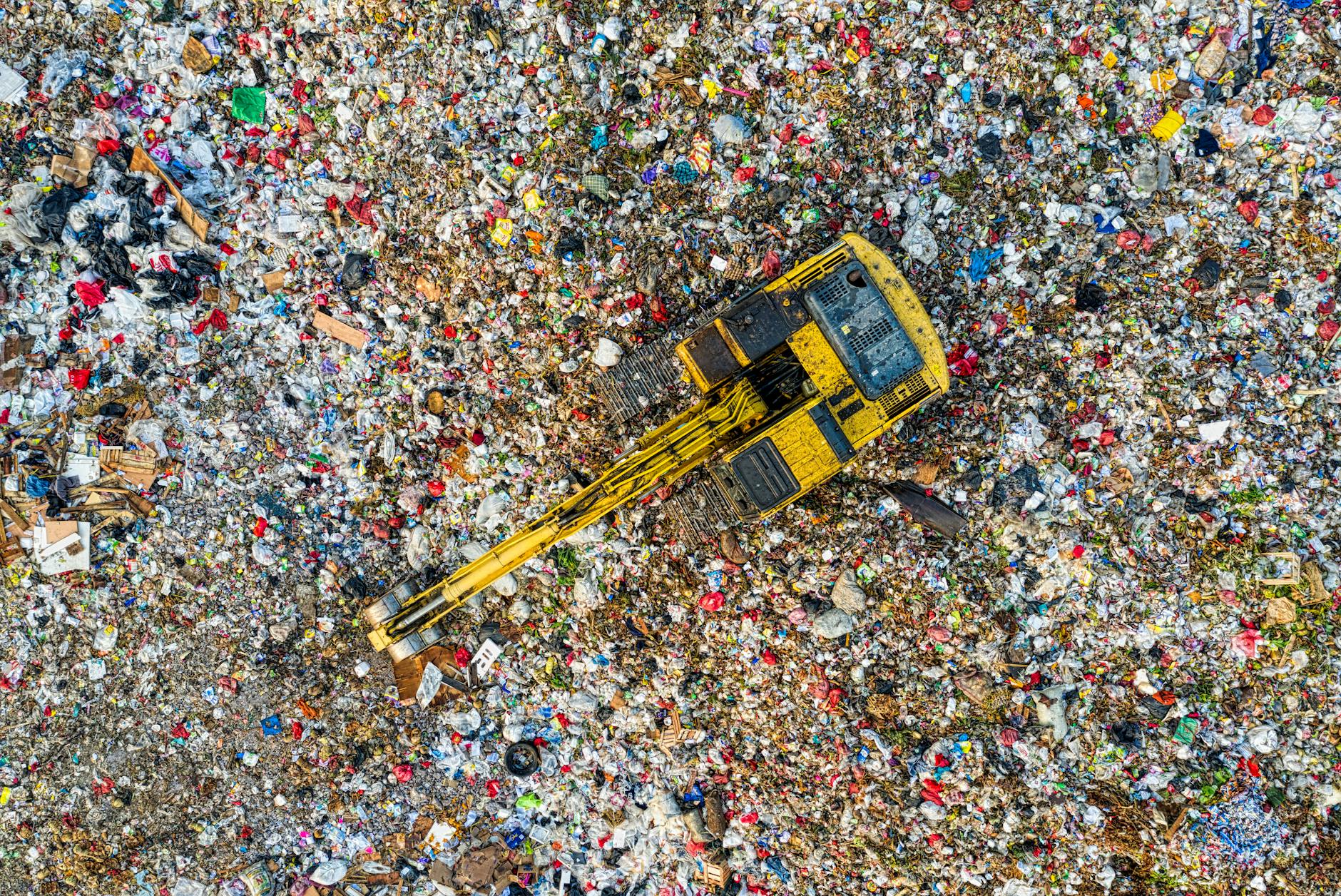
Historically, clothes were made of natural materials like cotton, wool, or leather. Fast fashion, however, uses cheap synthetic and blended materials that degrade quickly after only a few washes. Research by Euromonitor International found that garments are worn over a third less than they were 15 years ago (4). British citizens alone throw away one million tonnes of textiles every year, while Americans discard 11 million tonnes annually (2).
When clothes are discarded, millions of tonnes of textile waste end up in landfills or unregulated settings (3). Fast fashion materials are not biodegradable or recyclable – buttons, zippers, and synthetic blends make recycling costly and labor-intensive (4). Clothes sitting in landfills release toxins into the air, soil, and water systems (4).
According to the European Environment Agency (2022), 0.2 – 0.5 million tonnes of microplastic from textiles enter the global marine environment each year. But Professor Ceri Lewis warns that this may be a gross underestimation.
Microplastics are measured by trawling and capturing them with nets that have holes as small as 330 microns – smaller than a grain of sand. Anything smaller is missed, including microfibres. Spectroanalysis shows that many fibres are not counted as plastic – semi-synthetic materials, for example, are often discounted. This means microfibre pollution could be much worse than we think, silently infiltrating oceans and marine life.
What Can You Do?
Buy to last. Don’t buy to throw.
Sustainable or biodegradable products are often expensive, but there are ways to make a difference:
- Shop pre-loved: Depop, Vinted, charity shops, and vintage stores.
- Invest in higher-quality items that last longer.
- Wash synthetic garments less frequently and at lower temperatures to reduce microfibre shedding.
- Support brands that are transparent about materials and production processes.
Every garment you buy and care for thoughtfully is a vote against the tide of fast fashion waste. The less we participate in cheap, disposable fashion, the fewer microfibres end up in our oceans – helping protect marine ecosystems and our own future.
References:
- https://journals.asm.org/doi/10.1128/msphere.00681-22
- https://www.thegoodtrade.com/features/what-is-fast-fashion/
- https://ehjournal.biomedcentral.com/articles/10.1186/s12940-018-0433-7
- https://www.nationalgeographic.co.uk/environment/2019/06/the-huge-toll-fast-fashion-the-planet-and-why-the-answer-could-be-circular
 All Things Biology