Written by Lily Hunter
We all try to be healthy, whether that’s following a latest fad diet, forcing yourself to take the dog for a walk, or even scrolling on TikTok and spur of the moment entering yourself into the London marathon because all those people make it look so easy! Staying healthy can take many forms and benefit multiple areas of your life, but, a recent paper written by Ana Guzmán-Carrasco and colleagues has suggested that getting those leafy greens into your diet may actually help prevent cancer.
Cancer is on the rise globally, as people are living longer, giving their cells more time to malfunction. On top of this, fertility treatments and economic growth have put a stop to natural selection, meaning even cancers passed down genetically can be treated, and patients go on to have families and live normal lives. All these wonders of modern day science have benefited and expanded the human race, but, with their unintended effect on cancer levels, mean that more and more treatments need to be explored as these aspects of science grow.
Colorectal cancer (also known as bowel cancer) is the third most diagnosed cancer in the world, and has been a topic of particular worry in recent years as we see an alarming spike in early-onset development in young people, with every 1 in 20 cases appearing in those under 50 in the UK alone. When interviewing a senior professional from St Mark’s National Bowel Hospital on this rise, anonymized Dr X stated, “Yes it is true and concerning, and the reasons for it are unknown, but there does seem to be areal rise in incidence, is there something environmental or dietary we are doing differently?”. Despite this rising concern, expert Dr Yin Cao of Washington University reassures, “Early-onset colorectal cancer is a growing global phenomenon, but, at the same time, it is still rare.”. Even though this disease is, reassuringly, relatively uncommon, numbers are still predicted to rise in the UK more than any other country, particularly in women. Globally, 1.6 million people are expected to die from the disease in the year 2040 alone, highlighting the need for more research directed towards colorectal cancer treatments and the interest given to Guzmán-Carrasco’s paper.
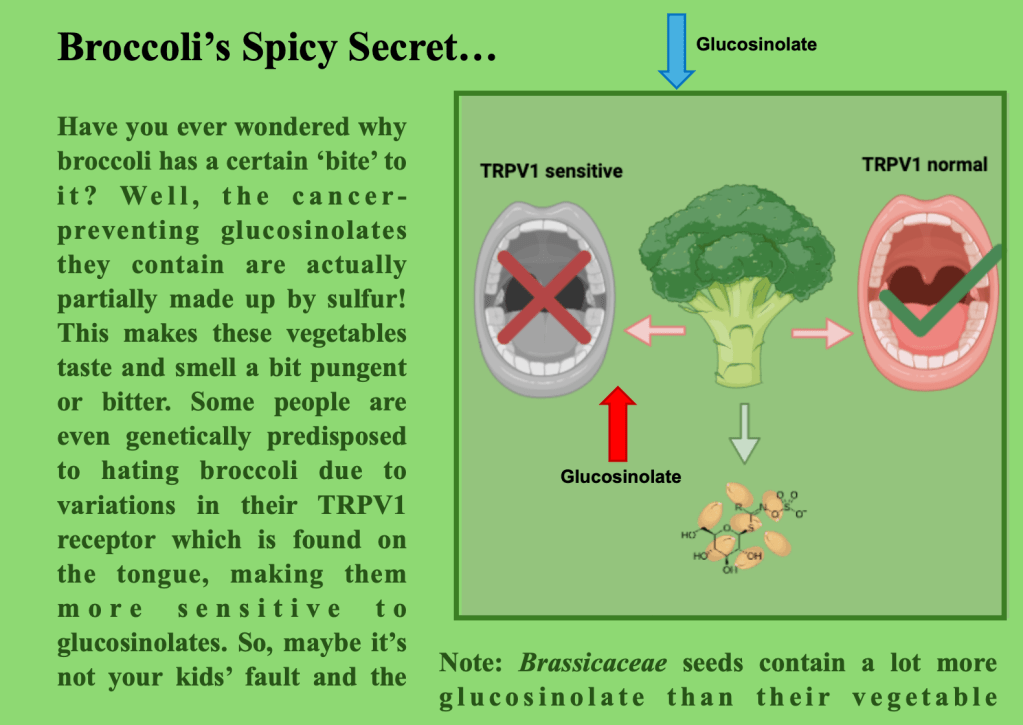
Their research builds on previous observations, that there is an inverse (opposite) association seen between the development of colorectal cancer and the consumption of legumes, vegetables and fruits. Brassicaceae is a family of flowering plants that includes many common vegetables you might see on your kitchen table, such as cabbage, broccoli, radish and rocket. You might have heard them called by different names like ‘the mustards’ or ‘the cabbage family’. The seeds of these vegetables have unusually high levels of an organic compound called glucosinolates, that, when broken down by an enzyme called myrosinase and other elements of your microbiome (all the non-human cells like bacteria, viruses and fungi that live in your body), turns into isothiocyanates (ITCs). That might be pretty hard to ‘digest’, but the key thing to remember is that ITCs are the real MVP, and the reason these foods are so good for you.
ITCs are what is known as ‘anticarcinogenic’ which means they reduce the activity of cancer causing molecules or ‘carcinogens’, and increase detoxification. They do this in many ways, including blocking carcinogenic enzymes called CYP enzymes, and activating enzymes that break down carcinogens known as phase 2 enzymes. They also cause cancerous cells to self-destruct.
These seeds also contains a lot of polyphenols, which are a compound found in lots of foods deemed ‘good for you’ such as fruit, dark chocolate and tea. Polyphenols act as an antioxidant and anti-inflammatory and are a real team player, pulling their weight in lots of different roles around the body to keep you healthy.
Most importantly, polyphenols are free radical scavengers, which means they hunt out products of cellular metabolism that are highly reactive and damaging to living cells. This damage can cause a variety ofnegative effects, from worsening ageing and arthritis, to altering cellular DNA and contributing towards cancer formation.
Guzmán-Carrasco’s paper used their knowledge on these essential compounds, to try to create a purified pellet containing extracts of all this good stuff. This doesn’t mean you will be able to stop eating your greens, or be able to shop these pellets at the local Holland and Barret any time soon, but the results were very interesting. White mustard seeds were proven to have the highest number of polyphenols whereas rocket seeds showed the highest antioxidant capabilities and best ability to scavenge free radicals. These two seeds were therefore the most recommended and placed in the pellet. As a side note, rocket was also very efficient at removing excess harmful iron from the body!
It is worth mentioning that this experiment was only conducted in mice so, there a possibility these findings wont translate to humans, but, when mice with colorectal cancer were given this pellet, tumours developed to only half the size compared to the untreated mice. When this was combined with an exercise regimen, the tumour was even smaller, although not quite enough to be significantly different. If this wasn’t enough, it also caused a reduction in the number of polyps (tumours) that developed, an effect which only increased with the addition of exercise.
This isn’t the first time the benefits of the cabbage family have been highlighted as a possible shield against cancer. Broccoli extract has been proven to reduce brain tumours, and consumption of all cabbage familyproduce reduces markers for cancer cells in the body. On top of this, Brassicaceae have also been implicated in the prevention of inflammatory bowel disease and arthritis due to their anti-inflammatory properties. They have also been explored as a treatment for diabetes, due to their ability to slowly release a compound called hydrogen sulfide, which can help balance sugar and insulin levels. Their extensive health benefits are not entirely surprising however, as mustard seeds are already used as a treatment for hepatitis, jaundice and obesity. Even so, the concept of your food affecting something as big as cancer can be quite hard to believe, even though most of us agree on the general health benefits of a well-rounded diet. It may, therefore, be surprising to know that 50% of the currently available treatments for colon cancer are derived from natural products.
In terms of common misconceptions and myths surrounding colorectal cancer, Dr X had this to say: “that it’s [colorectal cancer] a disease of older people, but that is a myth. maybe it’s also a slight myth that you always have symptoms… if the cancer is on the right side of the bowel you can get very few symptoms, these occult symptoms are important and that is why screenings are so important”. Needless to say it is important to be aware of symptoms of cancer as no diet ensures protection. For colorectal cancer these include blood in your stool, changes in bowel movements, bloating and weight loss. All of these symptoms are a sign to check in with your GP, no matter how many cabbages you’ve eaten recently!
Regardless, if you are looking for general preventative advice, cancerresearch UK, does have some dietary recommendations. More fibre in your diet for example, can help regulate your bowel movements and make them more frequent, reducing cell damage. When asked for advice on minimizing colorectal cancer risk, Dr X said: “minimize processed foods, vary your diet with healthy fruit and vegetables and avoid processed sugar”. Yet, despite the advice implying it is general diet and not specific foods that will reduce your risk of cancer, it has not stopped the emergence of fad diets that take scientific findings to the extreme in their goal to achieve ‘perfect health’ or even cure cancer.
An example of this can be seen in the story of Irena Stoynova who was diagnosed with non-Hodgkin lymphoma in 2021 and set out to cure herself using holistic methods and diet. Throughout her self-treatment, she spent £2,000 on juicers eating a purely liquid diet, losing 20kg in the process and ending up hospitalized. She is now in remission after undergoing chemotherapy and works to educate people on the dangers of ignoring medical advice, stating “its great to have beliefs, its great if they’re backed by science but please don’t cut off your consultants”. So, whilst diet can influence cancer outcomes to a certain level, a balanced and healthy diet is the only real way to see any of those benefits (and it wouldn’t hurt to throw a few more cabbages into the mix!). As consultant haematologist Clare Rees, said to sky news, “we always encourage people to go to Macmillan cancer support for genuine information”.
Overall, this paper opens up a world of possibilities into the future therapeutic benefits of Brassicaceae seeds, and what eating those greens might do for your health, not only in relation to cancers, but for all inflammatory conditions and beyond.
References:
Chevilly, S., Dolz‐Edo, L., Esteras, C., Yenush, L. and Mulet, J. (2023). Identification of Distinctive Primary Metabolites Influencing Broccoli (Brassica oleracea, var. Italica) Taste. Foods, 12(2), pp.339–339. doi:https://doi.org/10.3390/foods12020339.
Cicio, A., Serio, R. and Zizzo, M.G. (2023). Anti-Inflammatory Potential of Brassicaceae-Derived Phytochemicals: In Vitro and In Vivo Evidence for a Putative Role in the Prevention and Treatment of IBD. Nutrients, [online] 15(1), p.31. doi:https://doi.org/10.3390/nu15010031.
Guzmán-Carrasco, A., Mesas, C., Doello, K., Porres, J.M., García-Beltrán, A., Martínez, R., Bermúdez, F., Peña, M., Consolación Melguizo and Prados, J. (2025). The Antioxidant and Chemopreventive Activity of a Nutraceutical Derived from Brassicaceae Seed Extracts for Colorectal Cancer. Nutrients, [online] 17(8), pp.1358–1358. doi:https://doi.org/10.3390/nu17081358.
Hamed, M.A., Naser, A., Aboutabl, M.E., Osman, A.F., Hassan, Aziz, W.M., Khalil, B., Farghaly, A.A. and El-Hagrassi, A.M. (2021). Bioactive compounds and therapeutic role ofBrassica oleraceaL. seeds in rheumatoid arthritis ratsviaregulating inflammatory signalling pathways and antagonizing interleukin-1 receptor action. Biomarkers, 26(8), pp.788–807. doi:https://doi.org/10.1080/1354750x.2021.1999504.
NHS (2023). Bowel Cancer – Symptoms. [online] nhs.uk. Available at: https://www.nhs.uk/conditions/bowel-cancer/symptoms/.
Phaniendra, A., Jestadi, D.B. and Periyasamy, L. (2014). Free Radicals: Properties, Sources, Targets, and Their Implication in Various Diseases. Indian Journal of Clinical Biochemistry, [online] 30(1), pp.11–26. doi:https://doi.org/10.1007/s12291-014-0446-0.
Piragine, E., Petri, D., Giometto, S., Martelli, A., Lucenteforte, E. and Calderone, V. (2022). Potential effects of Alliaceae and Brassicaceae edible plants on blood glucose levels in patients with type 2 diabetes: A systematic review and meta-analysis of clinical trials. Pharmacological Research, [online] 185, p.106519. doi:https://doi.org/10.1016/j.phrs.2022.106519.
Prajapati, V.D., Maheriya, P.M., Jani, G.K., Patil, P.D. and Patel, B.N. (2014). Lepidium sativum Linn.: A current addition to the family of mucilage and its applications. International Journal of Biological Macromolecules, 65, pp.72–80. doi:https://doi.org/10.1016/j.ijbiomac.2014.01.008.
Wu, X., Zhou, Q. and Xu, K. (2009). Are isothiocyanates potential anti-cancer drugs? Acta Pharmacologica Sinica, [online] 30(5), pp.501–512. doi:https://doi.org/10.1038/aps.2009.50.
You, W. and Henneberg, M. (2017). Cancer incidence increasing globally: The role of relaxed natural selection. Evolutionary Applications, 11(2), pp.140–152. doi:https://doi.org/10.1111/eva.12523.
https://news.cancerresearchuk.org/2024/12/11/early-onset-bowel-cancer-rise-global-phenomenon/
https://news.sky.com/story/former-model-almost-died-trying-to-cure-cancer-with-juice-diet-13118685
Quotes:
- First hand quotes from interview with Dr X on 29/04/25 via call
- Secondary quotes from Dr Yin Cao, sourced from Cancer Research article: ‘Bowel cancer rates rising in younger adults around the world’ by Tim Gunn 11 Dec 2024. https://news.cancerresearchuk.org/2024/12/11/early-onset-bowel-cancer-rise-global-phenomenon/
- And from Irena Stoynova and Dr Clare Rees, sourced from Sky news article: ‘Former model almost died trying to cure cancer with juice diet’ by Claire Gilbody Dickerson 20 Apr 2024. https://news.sky.com/story/former-model-almost-died-trying-to-cure-cancer-with-juice-diet-13118685
 All Things Biology